
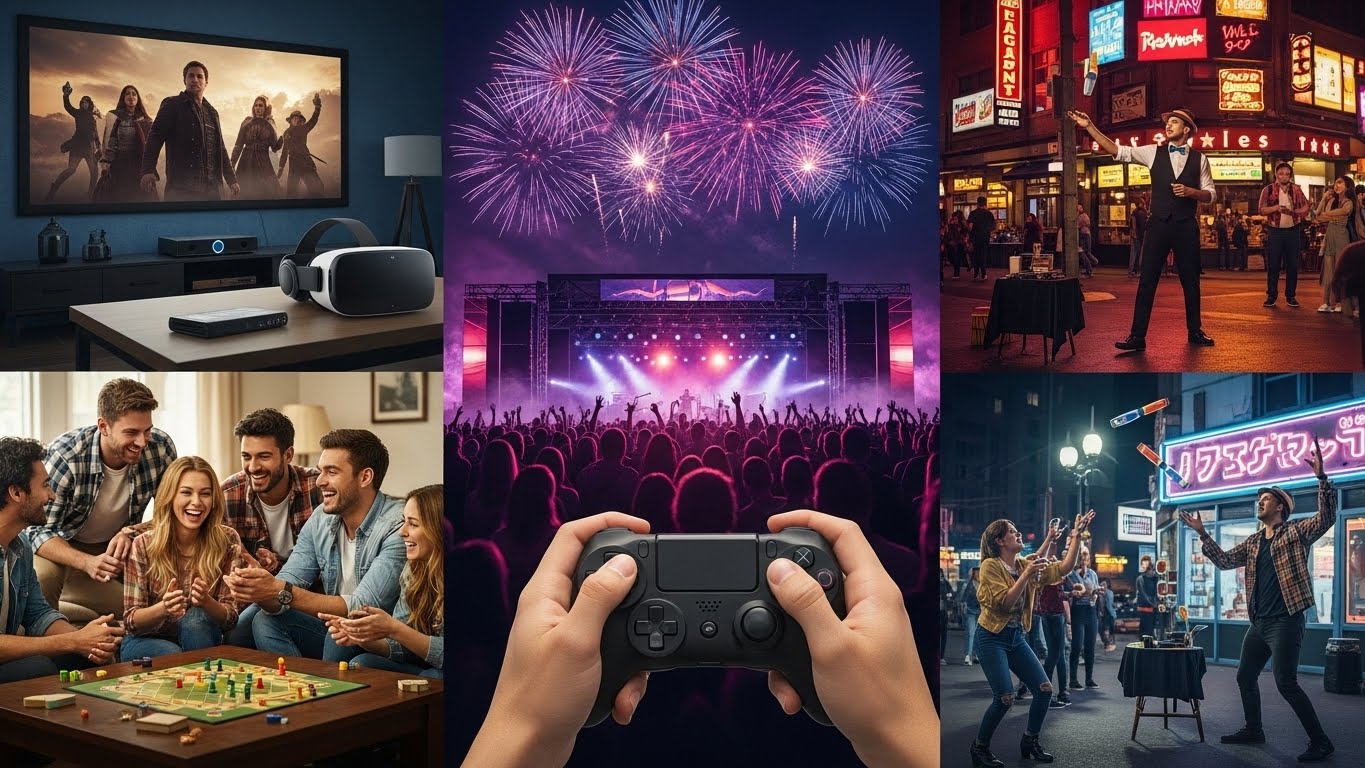
Digital technologies have transformed how people relax, socialize, and spend their free time. Entertainment is no longer limited to passive consumption such as watching television or listening to music. Instead, modern leisure increasingly involves interactive platforms that combine content, choice, and participation. Streaming services, online games, social media, and virtual experiences now coexist within a single digital ecosystem that shapes daily habits and preferences.
As digital environments evolve, leisure behavior becomes more personalized and flexible. Users can shift instantly between formats — watching, playing, browsing, or interacting — depending on mood, time availability, and cognitive energy. This fluidity has redefined what people consider entertainment and how they structure downtime.
The Shift from Passive to Interactive Entertainment
One of the most significant changes in modern leisure is the transition from passive consumption to active engagement. Traditional media positioned audiences as observers, while digital platforms invite participation. Interactive design, choice-driven navigation, and real-time feedback encourage users to become involved rather than simply watch.
Interactive entertainment environments typically include:
- personalized content feeds
- adaptive interfaces responding to behavior
- real-time interaction and feedback
- continuous content availability
These features create a sense of agency, allowing users to influence their entertainment experience. Instead of following fixed schedules or formats, people now curate their own leisure paths, moving between activities according to interest and attention.
This shift also changes expectations. Users increasingly value responsiveness, speed, and control in entertainment platforms, favoring experiences that adapt to them rather than requiring adaptation from the user.
Understanding digital entertainment habits in Modern Users
Research into digital entertainment habits shows that contemporary audiences rarely rely on a single form of leisure. Instead, they combine multiple digital activities within short time spans — for example, watching video content while browsing social platforms or engaging with interactive applications between tasks. This pattern reflects broader changes in attention and media consumption.
Several behavioral trends define modern digital leisure:
- preference for short, engaging content segments
- rapid switching between entertainment formats
- integration of entertainment into daily routines
- expectation of instant accessibility
These habits illustrate how entertainment has become embedded in everyday micro-moments rather than confined to dedicated leisure periods. Waiting times, breaks, and transitions throughout the day now serve as opportunities for digital engagement.
The result is a distributed leisure model, where entertainment occurs continuously in small intervals rather than in isolated sessions.
Personalization and Choice in Digital Leisure
Personalization has become a central driver of entertainment behavior. Algorithms and adaptive interfaces analyze user preferences to recommend content aligned with interests and previous interactions. This reduces search effort and increases perceived relevance, making engagement more efficient.
For users, personalization offers several advantages:
- faster discovery of appealing content
- reduced decision fatigue
- alignment with personal interests
- smoother navigation across platforms
However, personalization also reinforces habitual patterns. When recommendations consistently reflect past behavior, users may repeat familiar choices rather than explore new formats. Over time, this shapes stable leisure preferences and predictable engagement cycles.
Despite this, perceived control remains high. Users experience entertainment as self-directed even when underlying systems guide visibility and selection.
Entertainment as Continuous Digital Presence
Unlike traditional leisure, digital entertainment does not require dedicated time or location. Mobile devices and constant connectivity allow entertainment to accompany daily activities seamlessly. Leisure and routine tasks increasingly overlap, creating a blended digital lifestyle.
This integration changes how people perceive relaxation. Entertainment is no longer an occasional activity but an ongoing background presence that fills cognitive gaps and idle moments. Short interactions accumulate into meaningful leisure time without requiring explicit planning.
Continuous accessibility also supports spontaneous engagement. Users can initiate or end entertainment instantly, adjusting duration and intensity to current context. This flexibility aligns with modern schedules characterized by fragmentation and multitasking.
The Future of Digital Leisure Behavior
As digital environments continue to expand, entertainment habits will likely become even more adaptive and personalized. Emerging technologies such as immersive interfaces, real-time interaction systems, and predictive content models will further blur boundaries between different forms of leisure.
Future digital entertainment will likely emphasize:
- seamless transitions between formats
- deeper personalization of experiences
- interactive and participatory engagement
- integration across devices and contexts
These developments suggest that leisure will remain closely intertwined with digital ecosystems. Understanding how digital entertainment shapes behavior helps explain broader shifts in attention, choice, and everyday habits in contemporary life.
In modern society, entertainment is no longer a separate activity — it is an integral part of how people structure time, attention, and experience within the digital world.